
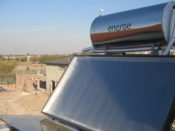
People are using solar panel system for hot water from years now, these systems are the best way to control the cost if we compare them with other systems and more efficiently too but the biggest problem of people who use these systems are the Freezing collectors and panels, you will hear many from many people about this problem with their systems in case of severely cold weather. There are ways to prevent this thing and that is the solar hot water system with water filled flat panels, evacuated tubes or a closed system with glycol.
The simplest and the most effective way to prevent the effects of weather and give these systems frost protection are the closed systems with a glycol filled tank and flat panels on the roof. The glycol works as a fluid which transfers heat. It also works as an agent which is anti-freezing to prevent the water in the panels from freezing. Though, there are two disadvantages to glycol filled flat panels. The first disadvantage is their efficiency. ORER claimed in their website that the efficiency of these systems lessens 20% then its actual capacity and it will work less efficiently than other such systems. The second issue is leaks. While the glycol is food grade, any leaks will seriously affect the taste of your tank water
It is a fact that some water filled flat panel systems work more efficiently than the equivalent size evacuated tube systems. But in the colder months, the panels on water filled systems would freeze which will cause it to crack if there won’t be any primary and secondary frost protection system. These systems depends on the ethics that moving water will freeze at much lower temperatures than still water.
You will find that there is a electric sensor system is installed On the water filled Flat panel systems in the top of the panels which is to spot the change in the water, when the temperature of the water in the panels drops to below 3 degrees Celsius and as soon as it happens the sensor will switches on the electric solar circulating pump. This will help the water to keep moving around the system from the base of the storage tank to the panels. This is called the primary frost protection system.
As a secondary frost protection system an anti frost valve is installed on the water filled flat panels. This valve automatically opens when the temperature of the water in the panels drops below 2 degrees Celsius. The pressure of the cold water entering the storage tank pressurizes the water in the panels. This forces water to constantly flow through the panels and out of the frost valve. Thus keeping water flow through the panels. With no water pressure the valve will open but no water will flow out of the panels and the water in the panels will be still.